
Full Grain vs Top Grain Leather: What's the Difference?
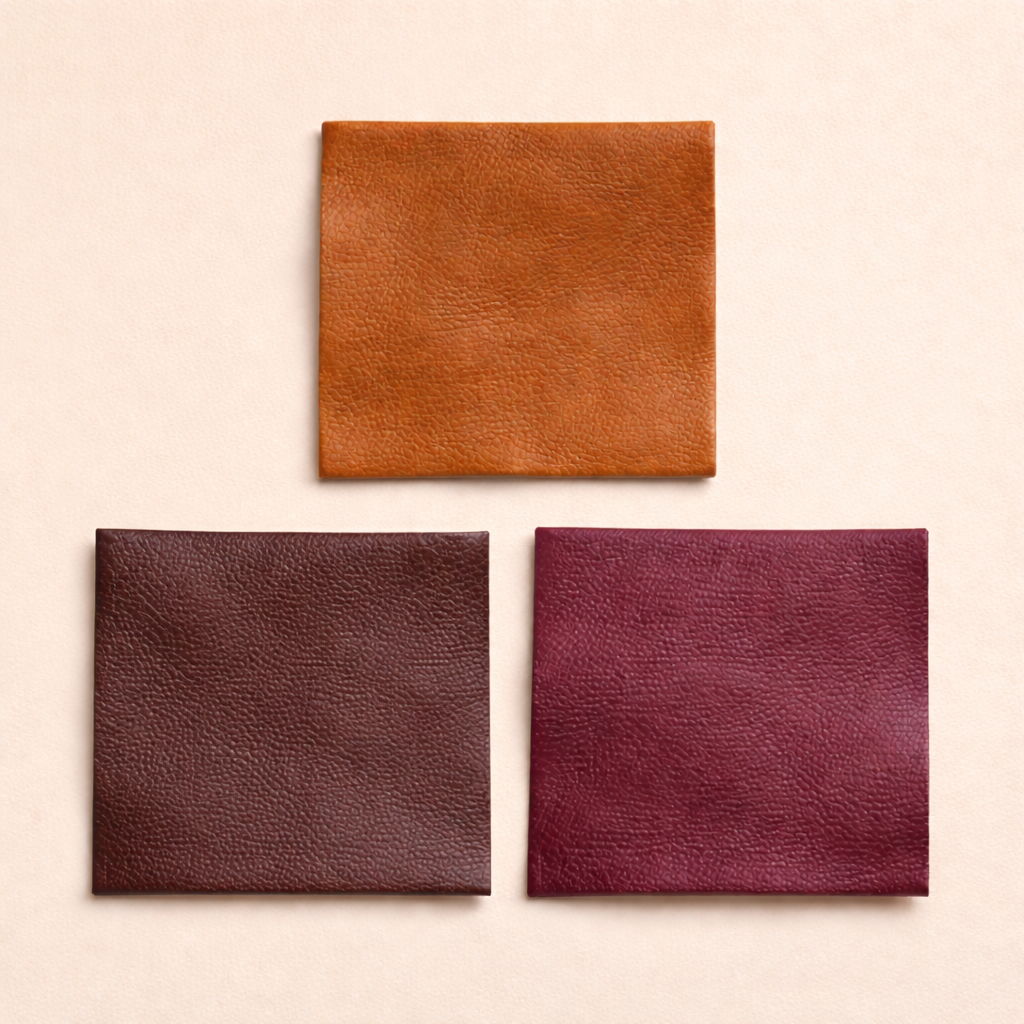
When shopping for leather goods, you'll quickly encounter terms like full grain leather, top grain leather, genuine leather, and bonded leather. While these labels are often used in marketing, many consumers aren't sure what they actually mean—or which type of leather is worth investing in.
If you've ever wondered why one leather bag costs $100 while another costs $500, understanding leather quality is one of the most important places to start.
Not all leather is created equal.
The type of leather used in a bag, wallet, briefcase, or travel accessory directly affects its durability, appearance, longevity, and how it ages over time.
In this guide, we'll break down the differences between full grain and top grain leather, explain the leather grading hierarchy, and help you determine which option is best for your lifestyle.
Understanding Leather Grades
Leather comes from animal hides, most commonly cowhide. Once the hide is processed, manufacturers can treat and finish it in different ways.
The quality of the final product depends largely on how much of the hide's natural structure remains intact.
The leather industry generally recognizes four broad categories:
1. Full Grain Leather
Highest quality.
2. Top Grain Leather
High quality with some surface correction.
3. Genuine Leather
Lower-grade leather made from remaining layers of the hide.
4. Bonded Leather
Leather scraps and fibers bonded together with adhesives.
While all four technically contain leather, the differences in quality, durability, and longevity can be significant.
Think of it like solid hardwood furniture versus particle board. Both may look attractive initially, but their performance over time is very different.
What Is Full Grain Leather?
Full grain leather is widely considered the highest quality leather available.
It comes from the outermost layer of the hide, which contains the densest and strongest fibers. This layer naturally provides exceptional durability and resistance to wear.
Unlike lower grades, full grain leather retains the natural surface of the hide.
Rather than sanding away imperfections, manufacturers preserve natural markings, scars, wrinkles, and grain patterns.
These characteristics are not flaws.
They are evidence that the material is genuine.
Every piece of full grain leather tells a slightly different story.
Characteristics of Full Grain Leather
Strongest leather available
Retains natural grain pattern
Highly durable
Develops a rich patina
Ages beautifully
Unique appearance
Can last decades with proper care
Because the natural grain remains intact, full grain leather develops character as it ages rather than simply showing wear.
For many leather enthusiasts, this aging process is one of the most desirable features of the material.
What Is Top Grain Leather?
Top grain leather is also considered a premium leather, but it undergoes additional processing.
The surface layer is lightly sanded or buffed to remove imperfections, scars, and natural inconsistencies.
After sanding, a finish or protective coating is applied to create a smoother and more uniform appearance.
The result is leather that looks more consistent from piece to piece.
Characteristics of Top Grain Leather
Smooth appearance
Uniform texture
Softer feel
Easier maintenance
Greater stain resistance
More refined aesthetic
Because some of the natural grain has been removed, top grain leather is slightly less durable than full grain leather.
However, it is still considered a high-quality material and is commonly used in luxury accessories, handbags, and furniture.
Full Grain vs Top Grain Leather: Side-by-Side Comparison
Appearance
Full Grain Leather: Natural variations, visible grain, unique markings, organic character.
Top Grain Leather: More polished, uniform, and refined appearance.
Durability
Full Grain Leather: Excellent durability and longevity.
Top Grain Leather: Very durable, though slightly less robust than full grain.
Aging
Full Grain Leather: Develops rich patina and character.
Top Grain Leather: Ages well but develops less dramatic patina.
Maintenance
Full Grain Leather: Requires periodic conditioning.
Top Grain Leather: Typically easier to maintain because of protective finishes.
Price
Full Grain Leather: Generally more expensive.
Top Grain Leather: Often somewhat less expensive.
What Is Patina?
One of the most celebrated features of full grain leather is the development of patina.
Patina refers to the soft sheen, darkening, and character that leather develops through use and exposure over time.
As the leather interacts with sunlight, oils from your hands, and daily wear, it gradually transforms.
No two pieces age exactly the same.
The process creates a product that becomes uniquely yours.
This is one reason many leather enthusiasts view quality leather goods as lifetime investments rather than disposable accessories.
What Is Genuine Leather?
The term "genuine leather" often confuses consumers.
Many people assume genuine leather means high quality.
In reality, genuine leather is a specific grade of leather that typically ranks below both full grain and top grain.
It is usually made from the lower layers of the hide after the stronger outer layers have been removed.
Manufacturers often apply coatings or embossing to improve appearance.
While genuine leather can still be functional, it generally does not offer the durability, longevity, or aging characteristics associated with higher-quality leather.
Genuine Leather Pros
Lower cost
Widely available
Acceptable durability for some products
Genuine Leather Cons
Less durable
Limited patina development
Shorter lifespan
More prone to wear
What Is Bonded Leather?
Bonded leather sits at the bottom of the quality hierarchy.
It is created by shredding leather scraps and fibers and combining them with adhesives and synthetic materials.
The mixture is then pressed into sheets and coated to resemble leather.
While bonded leather may initially look attractive, it often lacks durability.
Over time it may crack, peel, or deteriorate.
For products intended to last many years, bonded leather is generally not considered a worthwhile investment.
Which Leather Lasts the Longest?
When longevity is the primary concern, full grain leather is typically the best choice.
Its dense fiber structure allows it to withstand decades of use.
Many full grain leather products remain functional for twenty years or more when properly maintained.
In some cases, they are passed down through generations.
Top grain leather also offers impressive longevity, though it may not age as dramatically as full grain leather.
Which Leather Is Best for Bags?
The answer depends on your priorities.
Choose Full Grain Leather If You:
Appreciate natural character
Want maximum durability
Love patina development
View leather goods as long-term investments
Prefer timeless craftsmanship
Choose Top Grain Leather If You:
Prefer a polished appearance
Want a softer feel
Value consistency
Like modern luxury aesthetics
Want easier maintenance
Both options can make excellent bags when paired with quality craftsmanship.
Which Leather Is Best for Wallets?
Wallets experience constant handling and friction.
Because of this, full grain leather often performs exceptionally well.
The material develops beautiful character from everyday use and tends to become more attractive over time.
However, top grain leather wallets remain a popular choice for consumers who prefer a cleaner, more uniform appearance.
Why Craftsmanship Matters as Much as Leather Grade
Even the highest-quality leather cannot compensate for poor craftsmanship.
When evaluating a leather product, consider:
Stitching
Look for:
Consistent stitch length
Straight seams
Strong thread
Reinforced stress points
Hardware
Quality hardware should:
Feel substantial
Operate smoothly
Resist tarnishing
Maintain functionality over time
Construction
Well-constructed leather goods:
Hold their shape
Distribute weight properly
Age gracefully
Require fewer repairs
The best leather products combine premium materials with skilled craftsmanship.
Is Full Grain Leather Worth the Investment?
For many people, the answer is yes.
While full grain leather products often require a larger initial investment, they can provide value over decades of use.
Rather than purchasing multiple replacements over time, a well-crafted full grain leather bag may accompany you through years of work, travel, and daily life.
When viewed through a long-term lens, quality often becomes the more economical choice.
A Quality Leather Collection Worth Considering
When you're investing in leather goods, the quality of the material is only part of the equation.
The craftsmanship, construction, and design all play a role in determining whether a piece becomes something you use for a few years or something you continue carrying for decades.
Pierre Leather's collection is designed around quality craftsmanship, timeless style, and everyday functionality, with leather pieces made to become more beautiful and meaningful through use.
Whether you're looking for a work bag, wallet, travel accessory, or everyday leather essential, choosing a well-crafted piece can make all the difference.
Looking for leather goods made to last?
Explore the Pierre Leather Collectioyn →
Frequently Asked Questions
Is full grain leather waterproof?
No leather is completely waterproof. However, full grain leather offers excellent durability and can withstand occasional moisture when properly conditioned.
Does full grain leather crack?
When maintained appropriately, full grain leather is highly resistant to cracking and can remain supple for decades.
Why is full grain leather more expensive?
Full grain leather uses the highest-quality portion of the hide and requires careful selection during production, making it more expensive to source and manufacture.
Is top grain leather real leather?
Yes. Top grain leather is genuine leather and is generally considered a premium material.
Which leather develops the best patina?
Full grain leather develops the richest and most distinctive patina over time.
Final Thoughts
Understanding the difference between full grain and top grain leather can help you make more informed purchasing decisions.
Both are quality materials capable of producing beautiful, durable products.
If you value authenticity, character, and exceptional longevity, full grain leather is often the gold standard.
If you prefer a smoother, more uniform appearance with easier maintenance, top grain leather remains an excellent choice.
Ultimately, the best leather goods combine premium materials with thoughtful craftsmanship, timeless design, and careful attention to detail.
At Pierre Leather, we believe great leather goods should become more beautiful with age—not less. That's why we focus on creating pieces designed to accompany you through years of work, travel, celebration, and everyday life.
Because true luxury isn't about owning more.
It's about owning fewer things that are made exceptionally well.