
Why Handmade Leather Goods Cost More: Understanding the Value Behind the Craft
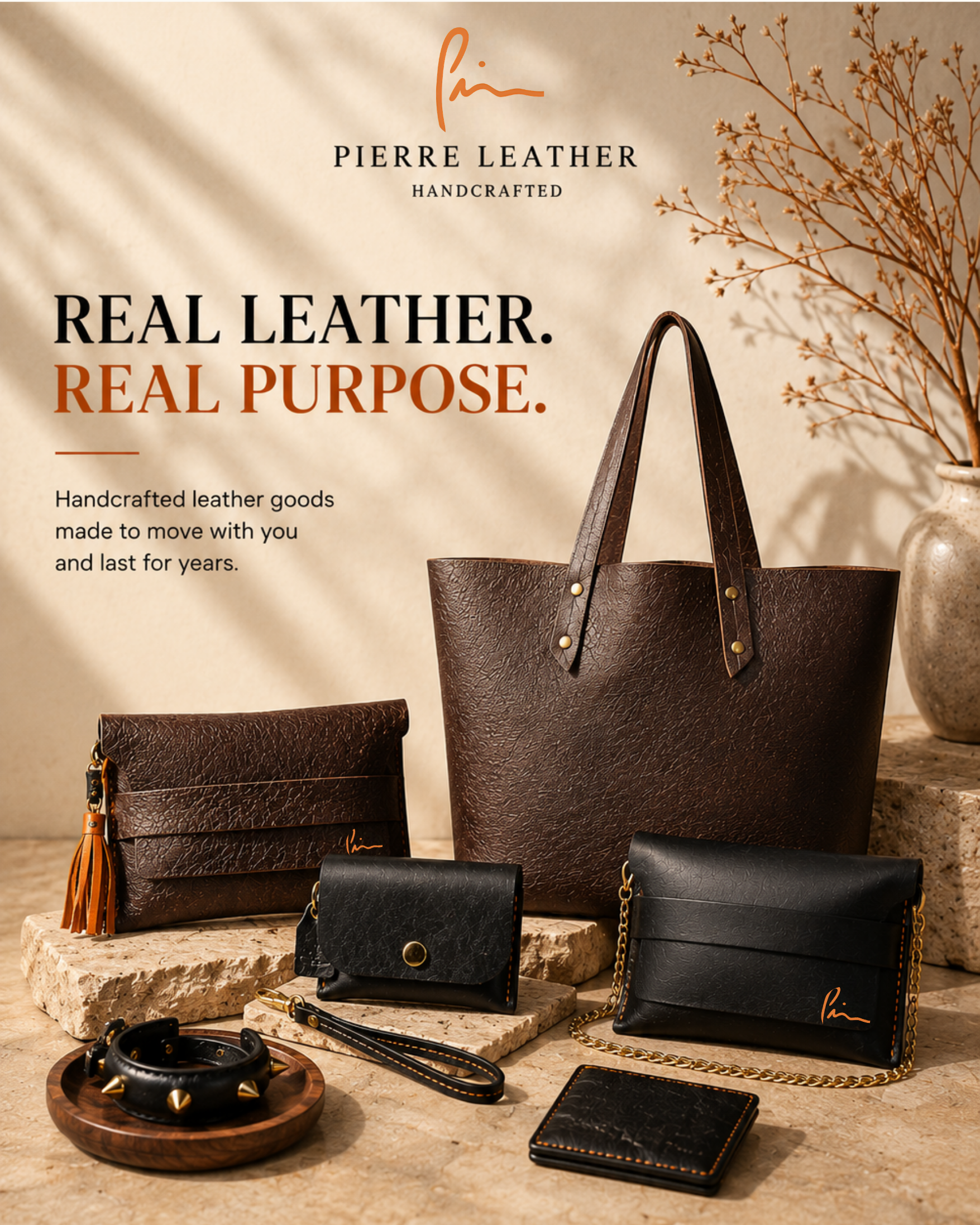
If you've ever compared leather bags online, you've probably noticed a significant difference in price.
One leather tote may cost less than $100, while another sells for several hundred dollars—or more.
At first glance, they may appear similar.
Both are leather.
Both hold your belongings.
Both serve the same basic purpose.
So why does one cost significantly more?
The answer often comes down to craftsmanship, materials, time, and attention to detail.
When you purchase a handmade leather bag, wallet, passport holder, or accessory, you're not simply paying for a product. You're investing in a process, a craft, and a level of quality that mass production often cannot replicate.
Understanding what goes into handmade leather goods can help explain why they command a higher price—and why many people consider them a better long-term value.
The Difference Between Handmade and Mass-Produced
Mass-produced leather goods are designed to maximize efficiency.
Factories often manufacture hundreds or thousands of products at a time using assembly-line production methods.
Each worker may be responsible for only one small part of the process.
The primary goal is speed.
Handmade leather goods follow a different philosophy.
Rather than prioritizing quantity, artisans prioritize quality.
The focus is on careful construction, material selection, and attention to detail.
Each piece receives individual attention throughout the production process.
The result is often a product that feels more durable, distinctive, and thoughtfully made.
Handmade Takes Time
One of the biggest factors affecting price is labor.
A handcrafted leather product can require hours of skilled work.
The process often includes:
Pattern creation
Material selection
Leather cutting
Edge finishing
Hole punching
Stitching
Hardware installation
Conditioning
Quality inspection
Unlike factory production, many of these steps are completed by hand.
Every detail requires time.
While machines can increase speed, they cannot always replicate the precision and care of skilled craftsmanship.
Premium Materials Cost More
Quality begins with materials.
Many handmade leather brands intentionally use higher-grade materials because they want their products to last.
Full Grain Leather
Full grain leather is widely considered the highest-quality leather available.
Because it retains the strongest fibers from the hide, it offers exceptional durability and develops a rich patina over time.
Premium leather costs more to source, but it also performs better over the long term.
Superior Hardware
Quality leather goods often include:
Solid brass hardware
Durable zippers
Reinforced closures
High-quality buckles
Cheap hardware can fail long before the leather itself wears out.
Investing in quality components helps extend the life of the product.
Stronger Thread
Artisans often use heavy-duty thread designed to withstand years of use.
Small details like thread quality may seem insignificant initially, but they contribute greatly to durability.
You're Paying for Skill
Leather craftsmanship is a specialized skill developed through experience.
An artisan must understand:
Leather characteristics
Pattern design
Construction techniques
Stitching methods
Edge finishing
Structural integrity
These skills often take years to develop.
Just as people value the expertise of a chef, architect, carpenter, or tailor, handmade leather goods reflect the expertise of a skilled craftsperson.
The price reflects not only the materials but also the knowledge required to transform those materials into a finished product.
Attention to Detail Matters
Mass production often prioritizes consistency and speed.
Handcrafted production prioritizes precision.
Artisans can evaluate each piece individually and make adjustments throughout the process.
This attention to detail may include:
Inspecting leather for imperfections
Matching grain patterns
Reinforcing stress points
Carefully finishing edges
Testing hardware functionality
These details often determine whether a product lasts two years or twenty.
Why Small-Batch Production Costs More
Large manufacturers benefit from economies of scale.
They purchase materials in massive quantities and spread production costs across thousands of units.
Independent makers often work in small batches.
This means:
Smaller material orders
Higher material costs
Longer production times
Greater hands-on involvement
While small-batch production increases costs, it often improves quality control.
Every product receives more attention before reaching the customer.
Handmade Products Are Often More Unique
One of the beautiful qualities of leather is that no two hides are identical.
Natural variations create subtle differences in texture, grain, and character.
Mass production often attempts to eliminate these differences.
Handmade production often embraces them.
As a result, each piece feels more individual and authentic.
Rather than owning something identical to thousands of others, customers receive a product with its own personality and story.
Handmade Leather Ages Differently
One of the most compelling reasons people invest in handmade leather goods is how they age.
Quality leather develops patina.
Patina refers to the rich character, color variation, and soft sheen that emerge over time.
As leather interacts with sunlight, movement, and daily use, it becomes uniquely yours.
Many mass-produced products deteriorate with age.
Well-crafted leather often becomes more beautiful.
This is one reason quality leather goods are frequently viewed as investments rather than purchases.
A Handmade Leather Investment Worth Considering
A handmade leather piece represents more than a purchase.
It represents a choice to invest in quality, craftsmanship, and products designed to become more valuable with time.
Unlike disposable accessories that are quickly replaced, well-made leather goods are created to become part of your everyday life — carrying your essentials, accompanying your journeys, and developing character through years of use.
At Pierre Leather, we believe exceptional leather goods should combine premium materials, thoughtful craftsmanship, and timeless design.
Each piece is created for those who appreciate accessories that are not only beautiful today but become even more meaningful tomorrow.
Discover handmade leather pieces designed to last for years.
Explore the Pierre Leather Collection →
Cost Per Use: The Hidden Value
When evaluating price, many people focus only on the initial cost.
A more useful metric is cost per use.
Consider two bags:
Bag A
Price: $100
Lifespan: 2 years
Bag B
Price: $400
Lifespan: 15 years
While Bag B costs more upfront, it may provide significantly better value over time.
Additionally, the higher-quality bag often offers:
Better appearance
Better functionality
Greater durability
More enjoyment during ownership
Looking at long-term value rather than short-term cost often changes the equation.
Handmade Supports Craftsmanship
Purchasing handmade goods also supports the continuation of traditional skills and craftsmanship.
Many artisans dedicate years to refining their techniques.
When consumers choose handcrafted products, they help preserve these traditions and encourage businesses that prioritize quality over mass production.
In a world increasingly driven by speed and convenience, there is something meaningful about supporting work created with patience, skill, and intention.
Sustainability and Handmade Goods
Handmade products often align with a more sustainable approach to consumption.
Rather than purchasing disposable products that require frequent replacement, consumers can invest in items designed to last.
Longer-lasting products may contribute to:
Reduced waste
Fewer replacements
More intentional purchasing decisions
Greater appreciation for craftsmanship
Sustainability is not only about materials.
It's also about longevity.
Common Misconceptions About Handmade Leather Goods
"You're Just Paying for a Brand"
While some luxury products carry significant brand markups, handmade leather goods often derive their value from materials and craftsmanship rather than logos.
"All Leather Is Basically the Same"
Leather quality varies significantly.
Full grain leather performs very differently from lower-grade alternatives.
"Machine-Made Means Better"
Machines excel at efficiency.
Hand craftsmanship excels at detail, quality control, and artistry.
Both have advantages, but they are not interchangeable.
"Expensive Always Means Better"
Not necessarily.
The best approach is to evaluate the complete picture:
Leather quality
Construction
Hardware
Craftsmanship
Reputation
Transparency
Price alone does not determine quality.
How to Know If a Handmade Leather Product Is Worth It
Before purchasing, ask:
What type of leather is being used?
How is the product constructed?
What hardware is included?
Is the maker transparent about materials?
Does the craftsmanship appear consistent?
Is the design timeless enough for long-term use?
Quality makers are usually proud to answer these questions.
Transparency is often a sign of confidence in the product.
Frequently Asked Questions
Why are handmade leather bags expensive?
The cost reflects premium materials, skilled labor, small-batch production, and extensive attention to detail.
Is handmade leather worth it?
For many consumers, yes. Handmade leather goods often offer greater durability, longevity, and craftsmanship than mass-produced alternatives.
How long do handmade leather bags last?
A well-made leather bag can last ten to twenty years or more when properly cared for.
Why is full grain leather more expensive?
Full grain leather comes from the strongest part of the hide and requires careful selection, making it more costly than lower-grade alternatives.
Do handmade leather goods improve with age?
Quality leather often develops a beautiful patina and becomes softer and more distinctive over time.
Final Thoughts
The price of a handmade leather good reflects much more than the cost of materials.
It reflects craftsmanship, expertise, patience, and intentional design.
Every cut, stitch, and finishing detail represents a commitment to creating something that will endure.
While mass-produced products are designed for convenience, handmade leather goods are designed for longevity.
They are meant to accompany you through years of work, travel, celebrations, and everyday life.
At Pierre Leather, we believe luxury is not defined by trends or logos.
It is defined by quality, craftsmanship, and creating products that become more meaningful with every year of use.
Because the best things in life are not simply owned.
They are carried, used, appreciated, and passed on.