
How to Care for Leather Bags: A Complete Guide to Keeping Your Leather Beautiful for Years
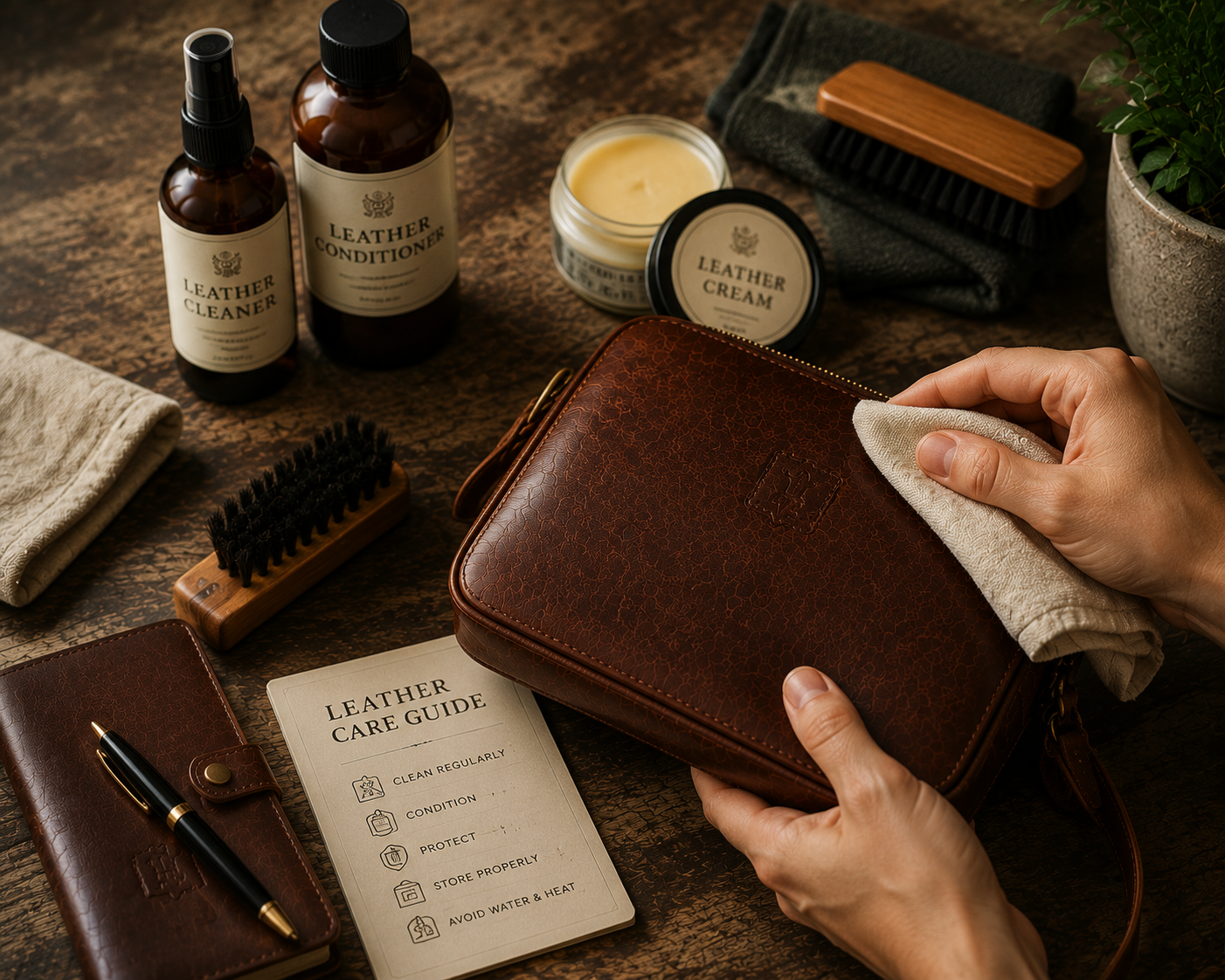
A quality leather bag is more than an accessory.
It's a companion that travels with you through workdays, vacations, celebrations, daily errands, and life's important moments.
One of the reasons people invest in leather is because of its remarkable longevity. Unlike many synthetic materials, genuine leather often becomes more beautiful with age.
However, even the highest-quality leather benefits from proper care.
The good news?
Leather maintenance is much simpler than many people think.
With a few basic habits, you can keep your leather bag looking beautiful for years—and often decades.
In this guide, we'll cover everything you need to know about cleaning, conditioning, storing, and protecting your leather goods.
Why Leather Requires Care
Leather is a natural material.
Just like skin, it responds to its environment.
Over time, leather can:
Lose moisture
Accumulate dirt
Absorb oils
Dry out
Become scratched
Be affected by sunlight and humidity
Proper care helps preserve both the appearance and durability of the leather.
The goal isn't to keep leather looking brand new forever.
The goal is to help it age gracefully.
Understanding Patina
Before discussing maintenance, it's important to understand one of leather's most celebrated characteristics: patina.
Patina is the rich character that develops through use and time.
As leather is exposed to sunlight, movement, oils from your hands, and everyday experiences, it gradually changes.
The color deepens.
The surface softens.
The leather develops a unique story.
This transformation is not damage.
It's one of the reasons quality leather becomes more beautiful with age.
When caring for leather, you're preserving the material while allowing it to develop its natural character.
Daily Leather Care Habits
The easiest way to maintain leather is through small preventative habits.
Avoid Overloading Your Bag
Every bag has a limit.
Consistently carrying excessive weight can:
Stretch the leather
Distort the shape
Stress the handles
Damage stitching
Use your bag as intended and avoid unnecessary strain.
Wipe Away Dust
A quick wipe with a soft, dry cloth every few days helps prevent dirt from building up.
Dust may seem harmless, but over time it can become embedded in the leather's surface.
Keep It Dry
Leather and water are not friends.
While occasional moisture is usually manageable, repeated exposure can lead to staining and damage.
If your bag becomes wet:
Blot gently with a clean cloth
Allow it to air dry naturally
Avoid direct heat sources
Never use a hair dryer or place leather near a radiator.
How to Clean a Leather Bag
Eventually, every leather bag needs cleaning.
Fortunately, most cleaning can be done at home.
Step 1: Empty the Bag
Remove all contents and shake out any debris.
Vacuum interior pockets if necessary.
Step 2: Dust the Surface
Use a soft microfiber cloth to remove loose dirt and dust.
Step 3: Use a Leather Cleaner
Apply a leather-specific cleaner according to the manufacturer's instructions.
Avoid:
Household cleaners
Bleach
Alcohol-based products
Harsh detergents
These products can strip natural oils and damage the leather.
Step 4: Wipe Gently
Use soft circular motions.
Never scrub aggressively.
Leather responds best to gentle treatment.
Step 5: Allow It to Dry
Let the bag dry naturally before applying any conditioners.
How Often Should You Clean Leather?
For most people:
Light cleaning: monthly
Deep cleaning: every 3–6 months
The frequency depends on how often the bag is used and the environments it encounters.
A daily work bag may require more frequent care than a bag used only occasionally.
Why Conditioning Matters
One of the biggest mistakes leather owners make is forgetting to condition their bags.
Leather contains natural oils that help maintain flexibility and durability.
Over time, those oils diminish.
Conditioning helps replenish moisture and prevent excessive drying.
Benefits include:
Softer leather
Reduced cracking
Improved flexibility
Enhanced appearance
Longer lifespan
Think of conditioning as moisturizing the leather.
How to Condition Leather
Step 1: Clean the Leather First
Always clean before conditioning.
Applying conditioner over dirt can trap debris within the leather.
Step 2: Apply a Small Amount
Use a soft cloth to apply a thin layer of conditioner.
More is not better.
A little goes a long way.
Step 3: Allow Absorption
Let the conditioner absorb into the leather.
Step 4: Buff the Surface
Use a clean cloth to remove excess product and restore a natural finish.
How Often Should Leather Be Conditioned?
A good rule of thumb is:
Every 3–6 months for frequently used bags
Every 6–12 months for occasional-use bags
Climate also matters.
Dry environments often require more frequent conditioning.
How to Store a Leather Bag Properly
Storage plays a major role in preserving leather.
Improper storage can cause:
Creases
Distortion
Drying
Mold growth
Best Storage Practices
Stuff the Bag
Fill the interior with:
Acid-free paper
Clean fabric
Tissue paper
This helps maintain shape.
Use a Dust Bag
Store your leather bag in a breathable dust bag whenever possible.
Avoid plastic containers or sealed bags.
Leather needs airflow.
Keep It Cool and Dry
Store leather away from:
Direct sunlight
Excess humidity
Heat sources
A closet shelf often works well.
Common Leather Care Mistakes
Using Baby Wipes
Many baby wipes contain chemicals that can damage leather over time.
Using Household Cleaners
Leather requires specialized products.
Household cleaners often strip protective oils.
Leaving Leather in a Hot Car
Heat can dry out leather and accelerate wear.
Storing Leather in Plastic
Plastic traps moisture and increases the risk of mildew.
Ignoring Small Issues
Minor scratches and stains are often easier to address early.
What About Scratches?
Minor scratches are normal.
In fact, many leather enthusiasts appreciate the character they create.
For light scratches:
Rub gently with clean fingers
Apply a small amount of conditioner
Buff with a soft cloth
Many superficial marks become less noticeable over time.
How to Handle Stains
Water Stains
Blot gently and allow the leather to dry naturally.
Oil Stains
Avoid rubbing.
Blot excess oil and consult a leather care professional if necessary.
Ink Stains
Ink can be difficult to remove without causing additional damage.
Professional cleaning is often the safest option.
Can Leather Bags Last a Lifetime?
The answer depends on three factors:
Leather quality
Craftsmanship
Maintenance
A well-made full grain leather bag that receives routine care can remain beautiful and functional for decades.
Many become family heirlooms passed from one generation to the next.
Quality leather is one of the few materials that often improves with age.
Invest In Leather That Is Made To Last
A quality leather bag is not just something you purchase for today.
It is a piece that can become part of your everyday life — carrying your essentials, accompanying you through important moments, and developing character with every experience.
Choosing the right leather means choosing craftsmanship, durability, and a design that remains valuable long after trends change.
At Pierre Leather, we create premium leather accessories built around timeless craftsmanship, functional design, and lasting quality.
From everyday bags to professional essentials, each piece is designed to age beautifully and become more meaningful over time.
Ready to invest in a leather piece designed for years of use?
Explore the Pierre Leather Collection →
Frequently Asked Questions
How often should I clean my leather bag?
Light cleaning monthly and deeper cleaning every few months is sufficient for most bags.
Can I use water to clean leather?
A slightly damp cloth is generally fine, but leather should never be saturated with water.
Do leather bags need conditioner?
Yes. Conditioning helps replenish moisture and maintain flexibility.
Is it normal for leather to scratch?
Yes. Minor scratches are part of the natural aging process and often contribute to the leather's character.
How long does a quality leather bag last?
A well-made leather bag can last ten to twenty years or more with proper care.
Final Thoughts
One of the greatest joys of owning quality leather is watching it evolve over time.
Unlike many modern materials that deteriorate with age, leather develops character, softness, and beauty through use.
With a little attention and care, your leather bag can accompany you through countless journeys, milestones, and memories.
At Pierre Leather, we believe exceptional leather goods are designed not only to last but to become more meaningful with every year of ownership.
Because true luxury isn't disposable.
It's something you carry with you for years.